Buy obstbau.eu ?
We are moving the project
obstbau.eu .
Are you interested in purchasing the domain
obstbau.eu ?
domain@kv-gmbh.de · 0541-91531010
Buy obstbau.eu ?
Can one create family trees and cladograms using taxonomy?
Yes, one can create family trees and cladograms using taxonomy. Taxonomy is the science of classifying organisms into different categories based on their characteristics and evolutionary relationships. By organizing organisms into groups based on their similarities and differences, taxonomists can create family trees that show the evolutionary history and relationships between different species. Cladograms, which are branching diagrams that show these relationships, can also be constructed using taxonomic data to visually represent the evolutionary history of a group of organisms. **
Can one create phylogenetic trees and cladograms using taxonomy?
Yes, one can create phylogenetic trees and cladograms using taxonomy. Taxonomy, the science of classifying organisms based on shared characteristics, forms the basis for constructing phylogenetic trees and cladograms. By organizing organisms into groups based on their evolutionary relationships, taxonomic classifications can be used to create visual representations of these relationships in the form of phylogenetic trees and cladograms. These tools help researchers understand the evolutionary history and relatedness of different species. **

Similar search terms for Taxonomy
Top-Angebote
Products related to Taxonomy:
-
Frudia My Orchard Passion Fruit exfoliating foam cleanser 120 mlFrudia My Orchard Passion Fruit, 120 ml, Cleansing for Women, Before you start your regular skincare routine, it is very important to prepare your skin with a thorough cleansing - without it, the following beauty care routine would not be nearly as effective. The FrudiaMy Orchard cleanser helps to remove all the impurities that have settled on the skin and in the pores throughout the day or overnight, leaving the skin perfectly clean and ready for any further skin treatments. Characteristics: washes the whole face gently and thoroughly refreshes pleasantly prevents skin from drying out Ingredients: vegan product How to use: Apply in the morning and/or evening to a damp face and lather. Then rinse off.4,76 £*Shipping: 3,99 £Secure redirect to the provider
-
Avani 5-Piece Rectangular Dining Set - Harvest, Harvest/Harvest Avani Side Chairs - Grandin RoadWood dining set: seats up to eight; includes extending dining table and four side chairs (your choice of Avani, Corinne, or Corinne Tufted). Avani Extending Table: includes removable 20-inch leaf and sturdy baluster legs; a high-quality veneer...2199,00 $*Shipping: 299,00 $Secure redirect to the provider




-
Is taxonomy the same as systematics?
Taxonomy and systematics are related fields within biology, but they are not the same. Taxonomy is the science of naming, defining, and classifying organisms into different categories based on their similarities and differences. Systematics, on the other hand, is the study of the evolutionary relationships between different organisms, including their classification and the reconstruction of their evolutionary history. While taxonomy focuses on the naming and categorization of organisms, systematics delves deeper into understanding the evolutionary relationships and patterns among different species. **
-
What is the difference between taxonomy and nomenclature in systematics?
Taxonomy is the science of classifying and naming organisms based on their characteristics and evolutionary relationships. It involves identifying, describing, and naming species, as well as organizing them into hierarchical categories like genus and family. Nomenclature, on the other hand, is the system of rules and conventions for naming organisms. It includes the specific rules for assigning scientific names to organisms, ensuring that each species has a unique and universally recognized name. In summary, taxonomy is the science of classification, while nomenclature is the system of naming within that classification system. **
-
Why does the WordPress custom taxonomy not appear in the Gutenberg editor?
The WordPress custom taxonomy does not appear in the Gutenberg editor by default because the Gutenberg editor is designed to primarily handle content creation and editing, while taxonomies are more related to organizing and categorizing content. However, developers can enable the display of custom taxonomies in the Gutenberg editor by using custom code or plugins to integrate the taxonomies into the editor interface. This allows users to easily assign and manage taxonomy terms for their content within the Gutenberg editor. **
-
'How do I harvest my crops in Minecraft?'
To harvest crops in Minecraft, you simply need to right-click or left-click on the fully grown crop with any tool or with your bare hand. This will cause the crop to drop and be collected into your inventory. Make sure to wait until the crops are fully grown before harvesting them, as harvesting them prematurely will not yield any items. Additionally, using a tool with the "Fortune" enchantment can increase the yield of harvested crops. **


Does wheat and other crops harvest themselves in Minecraft?
No, wheat and other crops do not harvest themselves in Minecraft. Players must manually harvest crops by breaking the fully grown plants with a tool such as a hoe. Once harvested, players can collect the crops and replant the seeds to continue growing more. There are no automated harvesting mechanisms for crops in the game, so players must actively tend to their farms to ensure a steady supply of food and resources. **
Which fruit can everyone harvest?
Everyone can harvest apples. Apples are a widely available fruit that grows in many different climates and regions, making them accessible to a wide range of people. Additionally, apple trees are often found in orchards or even in people's backyards, making it easy for individuals to pick their own apples. This accessibility makes apples a fruit that everyone can harvest. **
Top-Angebote
Products related to Taxonomy:
-
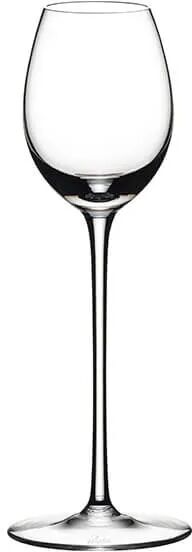
Riedel Sommeliers Orchard Fruit GlassDesigned for orchard fruit brandies such as apple and pear, the Riedel Sommeliers Orchard Fruit glass helps highlight fresh fruit aromas while keeping alcohol in balance. Its slender bowl allows delicate notes to gather and open gradually, delivering a clean, focused tasting experience that suits both lighter and more expressive fruit spirits. With a 125ml capacity, the glass is well sized for measured pours, while the 20cm height gives it a refined, elegant profile that helps keep the spirit away from hand warmth. The narrow shape concentrates fragrance at the rim, supporting clarity and definition from first sip to finish. Handmade from clear crystal, each glass is individually crafted, with subtle variations that reflect its artisanal nature. As part of Riedel’s original Sommeliers collection, the design follows a function‑led approach developed specifically for spirit tasting. Dishwasher safe and supplied as a single glass.88,00 £*Shipping: 0,00 £Secure redirect to the provider
-
Seasalt Saltings Crops BasketMeet your new favourite crops, the Seasalt Saltings Crops in Basket. These straight-leg trousers are made from naturally cool and breathable linen, and have been garment-dyed for a rich colour with a lived-in look. With added thoughtful details like a grown-on waistband for a smooth finish, and little side splits in the hems for distinctive details. There are two large utility-style pockets to the front as well as two patch pockets at the back. Made from 100% Linen. Machine washable.35,00 £*Shipping: 3,50 £Secure redirect to the provider
-
Can one create family trees and cladograms using taxonomy?
Yes, one can create family trees and cladograms using taxonomy. Taxonomy is the science of classifying organisms into different categories based on their characteristics and evolutionary relationships. By organizing organisms into groups based on their similarities and differences, taxonomists can create family trees that show the evolutionary history and relationships between different species. Cladograms, which are branching diagrams that show these relationships, can also be constructed using taxonomic data to visually represent the evolutionary history of a group of organisms. **
-
Can one create phylogenetic trees and cladograms using taxonomy?
Yes, one can create phylogenetic trees and cladograms using taxonomy. Taxonomy, the science of classifying organisms based on shared characteristics, forms the basis for constructing phylogenetic trees and cladograms. By organizing organisms into groups based on their evolutionary relationships, taxonomic classifications can be used to create visual representations of these relationships in the form of phylogenetic trees and cladograms. These tools help researchers understand the evolutionary history and relatedness of different species. **
-
Is taxonomy the same as systematics?
Taxonomy and systematics are related fields within biology, but they are not the same. Taxonomy is the science of naming, defining, and classifying organisms into different categories based on their similarities and differences. Systematics, on the other hand, is the study of the evolutionary relationships between different organisms, including their classification and the reconstruction of their evolutionary history. While taxonomy focuses on the naming and categorization of organisms, systematics delves deeper into understanding the evolutionary relationships and patterns among different species. **
-
What is the difference between taxonomy and nomenclature in systematics?
Taxonomy is the science of classifying and naming organisms based on their characteristics and evolutionary relationships. It involves identifying, describing, and naming species, as well as organizing them into hierarchical categories like genus and family. Nomenclature, on the other hand, is the system of rules and conventions for naming organisms. It includes the specific rules for assigning scientific names to organisms, ensuring that each species has a unique and universally recognized name. In summary, taxonomy is the science of classification, while nomenclature is the system of naming within that classification system. **
Similar search terms for Taxonomy
-
Frudia My Orchard Passion Fruit exfoliating foam cleanser 120 mlFrudia My Orchard Passion Fruit, 120 ml, Cleansing for Women, Before you start your regular skincare routine, it is very important to prepare your skin with a thorough cleansing - without it, the following beauty care routine would not be nearly as effective. The FrudiaMy Orchard cleanser helps to remove all the impurities that have settled on the skin and in the pores throughout the day or overnight, leaving the skin perfectly clean and ready for any further skin treatments. Characteristics: washes the whole face gently and thoroughly refreshes pleasantly prevents skin from drying out Ingredients: vegan product How to use: Apply in the morning and/or evening to a damp face and lather. Then rinse off.4,76 £*Shipping: 3,99 £Secure redirect to the provider
-
Avani 5-Piece Rectangular Dining Set - Harvest, Harvest/Harvest Avani Side Chairs - Grandin RoadWood dining set: seats up to eight; includes extending dining table and four side chairs (your choice of Avani, Corinne, or Corinne Tufted). Avani Extending Table: includes removable 20-inch leaf and sturdy baluster legs; a high-quality veneer...2199,00 $*Shipping: 299,00 $Secure redirect to the provider
-
Summit 5-Piece Round Dining Set - Harvest, Harvest/Harvest Summit Dining Chairs - Grandin RoadWood dining set: seats four; includes a table and four upholstered chairs (your choice of Summit, Avondale or Sanibel). Summit Table: well-crafted from solid hardwood and engineered wood plus a high-quality oak veneer for flawless surfaces,...1699,00 $*Shipping: 299,00 $Secure redirect to the provider
-
Summit 5-Piece Rectangular Dining Set - Harvest, Harvest/Harvest Summit Dining Chairs - Grandin RoadWood dining set: seats six to eight; includes an extending table and four upholstered chairs (your choice of Summit, Avondale or Sanibel) . Summit Extending Table: self-storing butterfly leaf with locating pins and latch lock hardware; well-crafted...1799,00 $*Shipping: 299,00 $Secure redirect to the provider
-
Why does the WordPress custom taxonomy not appear in the Gutenberg editor?
The WordPress custom taxonomy does not appear in the Gutenberg editor by default because the Gutenberg editor is designed to primarily handle content creation and editing, while taxonomies are more related to organizing and categorizing content. However, developers can enable the display of custom taxonomies in the Gutenberg editor by using custom code or plugins to integrate the taxonomies into the editor interface. This allows users to easily assign and manage taxonomy terms for their content within the Gutenberg editor. **
-
'How do I harvest my crops in Minecraft?'
To harvest crops in Minecraft, you simply need to right-click or left-click on the fully grown crop with any tool or with your bare hand. This will cause the crop to drop and be collected into your inventory. Make sure to wait until the crops are fully grown before harvesting them, as harvesting them prematurely will not yield any items. Additionally, using a tool with the "Fortune" enchantment can increase the yield of harvested crops. **
-
Does wheat and other crops harvest themselves in Minecraft?
No, wheat and other crops do not harvest themselves in Minecraft. Players must manually harvest crops by breaking the fully grown plants with a tool such as a hoe. Once harvested, players can collect the crops and replant the seeds to continue growing more. There are no automated harvesting mechanisms for crops in the game, so players must actively tend to their farms to ensure a steady supply of food and resources. **
-
Which fruit can everyone harvest?
Everyone can harvest apples. Apples are a widely available fruit that grows in many different climates and regions, making them accessible to a wide range of people. Additionally, apple trees are often found in orchards or even in people's backyards, making it easy for individuals to pick their own apples. This accessibility makes apples a fruit that everyone can harvest. **
* All prices are inclusive of VAT and, if applicable, plus shipping costs. The offer information is based on the details provided by the respective shop and is updated through automated processes. Real-time updates do not occur, so deviations can occur in individual cases. ** Note: Parts of this content were created by AI.