Buy obstbau.eu ?
We are moving the project
obstbau.eu .
Are you interested in purchasing the domain
obstbau.eu ?
domain@kv-gmbh.de · 0541-91531010
Buy obstbau.eu ?
Which criterion is it, the root criterion or the quotient criterion?
It is the root criterion. This criterion states that if the limit of the absolute value of the terms of a series to the power of 1/n is less than 1, then the series converges. This criterion is used to test the convergence of series with non-negative terms. **
What are the Abel's convergence criterion and the Leibniz criterion?
Abel's convergence criterion states that if a series ∑an converges and the sequence {bn} is bounded and monotonically decreasing, then the series ∑anbn also converges. This criterion is useful for determining the convergence of a series when the terms can be factored into two separate sequences. The Leibniz criterion is a test for the convergence of alternating series. It states that if the terms of an alternating series satisfy the conditions of being monotonically decreasing and approaching zero, then the series converges. This criterion is particularly useful for determining the convergence of series with alternating signs. **

Similar search terms for Criterion
Top-Angebote
Products related to Criterion:
-
Avani 5-Piece Rectangular Dining Set - Harvest, Harvest/Harvest Avani Side Chairs - Grandin RoadWood dining set: seats up to eight; includes extending dining table and four side chairs (your choice of Avani, Corinne, or Corinne Tufted). Avani Extending Table: includes removable 20-inch leaf and sturdy baluster legs; a high-quality veneer...2199,00 $*Shipping: 299,00 $Secure redirect to the provider
-
Summit 5-Piece Round Dining Set - Harvest, Harvest/Harvest Summit Dining Chairs - Grandin RoadWood dining set: seats four; includes a table and four upholstered chairs (your choice of Summit, Avondale or Sanibel). Summit Table: well-crafted from solid hardwood and engineered wood plus a high-quality oak veneer for flawless surfaces,...1699,00 $*Shipping: 299,00 $Secure redirect to the provider




-
What is the difference between the quotient criterion and the difference criterion?
The quotient criterion and the difference criterion are both used to test for convergence or divergence of a series. The quotient criterion involves taking the limit of the ratio of consecutive terms in the series, and if the limit is less than 1, the series converges. The difference criterion involves taking the limit of the difference between consecutive terms in the series, and if the limit is 0, the series converges. In essence, the quotient criterion focuses on the ratio of consecutive terms, while the difference criterion focuses on the difference between consecutive terms. **
-
What is the exclusion criterion?
The exclusion criterion is a predefined set of conditions or characteristics that are used to determine which individuals or subjects should be excluded from a study or analysis. These criteria are established to ensure that the study results are not influenced by certain factors that could skew the findings or introduce bias. By applying exclusion criteria, researchers can maintain the integrity and validity of their study results. **
-
What is the sterilization criterion?
The sterilization criterion refers to the standard that must be met in order to ensure that a sterilization process has been successful in eliminating all forms of microbial life, including bacteria, viruses, and fungi. This criterion typically involves achieving a certain level of microbial reduction, often measured by a logarithmic reduction factor (e.g. a 6-log reduction for sterilization). Meeting the sterilization criterion is crucial in various industries such as healthcare, pharmaceuticals, and food processing to prevent the spread of infections and ensure product safety. **
-
What is the Leibniz criterion?
The Leibniz criterion is a test used to determine the convergence of an alternating series. It states that if the terms of an alternating series decrease in absolute value and approach zero, then the series converges. In other words, if the terms of the series eventually become smaller and smaller, the series will converge. This criterion is named after the German mathematician and philosopher Gottfried Wilhelm Leibniz. **


Is it a mistake to apply the majorant criterion here instead of the minorant criterion?
Yes, it would be a mistake to apply the majorant criterion instead of the minorant criterion in this case. The majorant criterion is used to show convergence, while the minorant criterion is used to show divergence. Since we are trying to show divergence in this case, the minorant criterion would be the appropriate choice. Using the majorant criterion would not provide the necessary information to prove divergence. **
What is the monotonicity criterion 2?
Monotonicity criterion 2 states that if a change in the value of an input variable leads to a change in the value of an output variable in the same direction, then the partial derivative of the output variable with respect to the input variable is non-negative. In other words, if an increase in the input variable results in an increase in the output variable, then the partial derivative is positive. This criterion is used to determine the relationship between input and output variables in mathematical models and functions. **
Top-Angebote
Products related to Criterion:
-
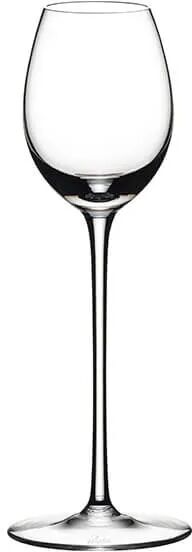
Riedel Sommeliers Orchard Fruit GlassDesigned for orchard fruit brandies such as apple and pear, the Riedel Sommeliers Orchard Fruit glass helps highlight fresh fruit aromas while keeping alcohol in balance. Its slender bowl allows delicate notes to gather and open gradually, delivering a clean, focused tasting experience that suits both lighter and more expressive fruit spirits. With a 125ml capacity, the glass is well sized for measured pours, while the 20cm height gives it a refined, elegant profile that helps keep the spirit away from hand warmth. The narrow shape concentrates fragrance at the rim, supporting clarity and definition from first sip to finish. Handmade from clear crystal, each glass is individually crafted, with subtle variations that reflect its artisanal nature. As part of Riedel’s original Sommeliers collection, the design follows a function‑led approach developed specifically for spirit tasting. Dishwasher safe and supplied as a single glass.88,00 £*Shipping: 0,00 £Secure redirect to the provider
-
Seasalt Saltings Crops BasketMeet your new favourite crops, the Seasalt Saltings Crops in Basket. These straight-leg trousers are made from naturally cool and breathable linen, and have been garment-dyed for a rich colour with a lived-in look. With added thoughtful details like a grown-on waistband for a smooth finish, and little side splits in the hems for distinctive details. There are two large utility-style pockets to the front as well as two patch pockets at the back. Made from 100% Linen. Machine washable.35,00 £*Shipping: 3,50 £Secure redirect to the provider
-
Which criterion is it, the root criterion or the quotient criterion?
It is the root criterion. This criterion states that if the limit of the absolute value of the terms of a series to the power of 1/n is less than 1, then the series converges. This criterion is used to test the convergence of series with non-negative terms. **
-
What are the Abel's convergence criterion and the Leibniz criterion?
Abel's convergence criterion states that if a series ∑an converges and the sequence {bn} is bounded and monotonically decreasing, then the series ∑anbn also converges. This criterion is useful for determining the convergence of a series when the terms can be factored into two separate sequences. The Leibniz criterion is a test for the convergence of alternating series. It states that if the terms of an alternating series satisfy the conditions of being monotonically decreasing and approaching zero, then the series converges. This criterion is particularly useful for determining the convergence of series with alternating signs. **
-
What is the difference between the quotient criterion and the difference criterion?
The quotient criterion and the difference criterion are both used to test for convergence or divergence of a series. The quotient criterion involves taking the limit of the ratio of consecutive terms in the series, and if the limit is less than 1, the series converges. The difference criterion involves taking the limit of the difference between consecutive terms in the series, and if the limit is 0, the series converges. In essence, the quotient criterion focuses on the ratio of consecutive terms, while the difference criterion focuses on the difference between consecutive terms. **
-
What is the exclusion criterion?
The exclusion criterion is a predefined set of conditions or characteristics that are used to determine which individuals or subjects should be excluded from a study or analysis. These criteria are established to ensure that the study results are not influenced by certain factors that could skew the findings or introduce bias. By applying exclusion criteria, researchers can maintain the integrity and validity of their study results. **
Similar search terms for Criterion
-
Avani 5-Piece Rectangular Dining Set - Harvest, Harvest/Harvest Avani Side Chairs - Grandin RoadWood dining set: seats up to eight; includes extending dining table and four side chairs (your choice of Avani, Corinne, or Corinne Tufted). Avani Extending Table: includes removable 20-inch leaf and sturdy baluster legs; a high-quality veneer...2199,00 $*Shipping: 299,00 $Secure redirect to the provider
-
Summit 5-Piece Round Dining Set - Harvest, Harvest/Harvest Summit Dining Chairs - Grandin RoadWood dining set: seats four; includes a table and four upholstered chairs (your choice of Summit, Avondale or Sanibel). Summit Table: well-crafted from solid hardwood and engineered wood plus a high-quality oak veneer for flawless surfaces,...1699,00 $*Shipping: 299,00 $Secure redirect to the provider
-
Summit 5-Piece Rectangular Dining Set - Harvest, Harvest/Harvest Summit Dining Chairs - Grandin RoadWood dining set: seats six to eight; includes an extending table and four upholstered chairs (your choice of Summit, Avondale or Sanibel) . Summit Extending Table: self-storing butterfly leaf with locating pins and latch lock hardware; well-crafted...1799,00 $*Shipping: 299,00 $Secure redirect to the provider
-
Modern Harvest Tools & Trends Durable Yellow Banana Storage Bags, Insulated Fruit & Vegetable Fresh Keep Bundle With Pocket Drawstring 5pcKeep Bananas Fresh Longer with Premium StorageTired of bananas ripening too fast Our durable yellow banana storage bags are designed to lock in freshness, keeping your bananas firm and delicious for days. Made from highquality, insulated fruit &...24,97 $*Shipping: 0,00 $Secure redirect to the provider
-
What is the sterilization criterion?
The sterilization criterion refers to the standard that must be met in order to ensure that a sterilization process has been successful in eliminating all forms of microbial life, including bacteria, viruses, and fungi. This criterion typically involves achieving a certain level of microbial reduction, often measured by a logarithmic reduction factor (e.g. a 6-log reduction for sterilization). Meeting the sterilization criterion is crucial in various industries such as healthcare, pharmaceuticals, and food processing to prevent the spread of infections and ensure product safety. **
-
What is the Leibniz criterion?
The Leibniz criterion is a test used to determine the convergence of an alternating series. It states that if the terms of an alternating series decrease in absolute value and approach zero, then the series converges. In other words, if the terms of the series eventually become smaller and smaller, the series will converge. This criterion is named after the German mathematician and philosopher Gottfried Wilhelm Leibniz. **
-
Is it a mistake to apply the majorant criterion here instead of the minorant criterion?
Yes, it would be a mistake to apply the majorant criterion instead of the minorant criterion in this case. The majorant criterion is used to show convergence, while the minorant criterion is used to show divergence. Since we are trying to show divergence in this case, the minorant criterion would be the appropriate choice. Using the majorant criterion would not provide the necessary information to prove divergence. **
-
What is the monotonicity criterion 2?
Monotonicity criterion 2 states that if a change in the value of an input variable leads to a change in the value of an output variable in the same direction, then the partial derivative of the output variable with respect to the input variable is non-negative. In other words, if an increase in the input variable results in an increase in the output variable, then the partial derivative is positive. This criterion is used to determine the relationship between input and output variables in mathematical models and functions. **
* All prices are inclusive of VAT and, if applicable, plus shipping costs. The offer information is based on the details provided by the respective shop and is updated through automated processes. Real-time updates do not occur, so deviations can occur in individual cases. ** Note: Parts of this content were created by AI.